70+ Sylvia Plath Poems Explained
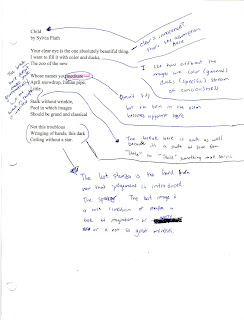
A Retail Life After The Mfa Analysis Of Child By Sylvia Plath

A Retail Life After The Mfa Analysis Of Blackberrying By Sylvia Plath

Jilted Poem Comments Plath Poems Sylvia Plath Poems Sylvia Plath

Edge By Sylvia Plath Sylvia Plath Poems Sylvia Plath Pretty Words
Sylvia Plath Poems Summary Gradesaver
A Figurative Language Analysis On Sylvia Plath Poems By Defi Rahmawati
It is considered to be semi-autobiographical giving the reader and Plath scholar insight into the relationship between the writer and her own father Otto.
Sylvia plath poems explained. Read more about Sylvia Plath. The lines are all quite short ranging from two words up to seven. Her case is complicated by the fact that her father was also a Nazi and her mother very possibly part Jewish. Chanting in an almost nursery-rhyme manner she compares him to terrifying patriarchal figures like a vampire a Nazi and a devil.
Ariel by Sylvia Plath is the title poem of her volume of poetry Ariel published after her death. Morning Song is one of several poems Sylvia Plath wrote concerning pregnancy birth and maternal feelings. Here is a poem spoken by a girl with an Electra complex. Fever 103 by Sylvia Plath is a very complex and powerful poem that speaks on themes of desire purity freedom and womens rightsindependence.
Although Sylvia Plath was succeeding poetically she was still deeply unhappy. Plath is considered to be one of the best poets of her generation. The poem is filled with the skillful application of consonance rhyming consonants and assonance rhyming vowels as well as an end slant or half-rhymes and head rhymes also called alliteration. Cut by Sylvia Plath is a ten stanza poem that is separated into sets of four lines known as quatrains.
The father died while she thought he was God. She was unfortunately riddled with mental agony which is often reflected in her poetry. He is at once a black shoe she was trapped within a vampire a fascist and a Nazi. Love set you going like a fat gold watch.
Sylvia Plath was a famous poet of the 1950s and 60s. Sylvia Plaths poem Daddy remains one of the most controversial modern poems ever written. Sylvia Plath was living in England with her fellow poet and husband Ted Hughes and she had already given birth to their first child Frieda. Plath explained the poem briefly in a BBC interview.
She is at first filled with guilt about her own sexual desires. In Plaths own words. Daddy by Sylvia Plath uses emotional and sometimes painful metaphors to depict the poets own opinion of her father. It is the second on this list to reference the holocaust and compares a father figure to many things including a Nazi officer and a vampire.
The poem is spoken by a girl with an Electra complex. The poem is constructed of sets of three lines also known as tercets. She tried to kill herself a number of times throughout the early 60s and in February of 1963 she succeeded. It is a short poem that highlights the confused reactions of the mother the speaker Plath as she tends to the needs of her new baby.
Daddy is perhaps Sylvia Plaths most famous poem. Mirror by Sylvia Plath Giving an autobiographical account of itself the mirror has highlighted its qualities in the poem Mirror. The poem begins with the speaker describing her father in several different striking ways. Comparing herself to a Jew at the concentration camps she details how she needs to finally be through with her father.
She was one of the pioneers in the genre of self-exploration and self-discovery. These quatrains do not follow a specific rhyme scheme or metrical pattern this is a technique known as free verse. It is a dark surreal and at times painful allegory that uses metaphor and other devices to carry the idea of a female victim finally freeing herself from her father. This was a stressful time for Plath.
The poem is composed of a series of images that take the reader into the speakers state of mind. The well known first line typifies the poem. The poetess suffered from clinical depression and attempted suicide several times succeeding in 1963 at the age of 30.

April 18 Poem By Sylvia Plath Poem Hunter Plath Poems Sylvia Plath Poems Poems

Sonnet To Eva My Favorite Poem By Sylvia Plath She Wrote It When She Was In Her Late Teens Early 20 S I First Read Silvia Plath Sonnets Literature Quotes

Pdf A Text Analysis Of The Poems Of Sylvia Plath

Lady Lazarus By Sylvia Plath By Firedusoleil On Deviantart Sylvia Plath Poems Sylvia Plath Quotes Plath Poems
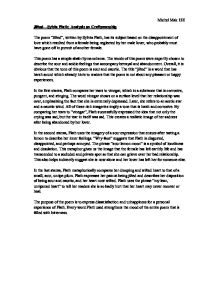
The Poem Jilted Written By Sylvia Plath Has Its Subject Based On The Disappointment Of Love Which Resulted From A Female Being Neglected By Her Male Lover A Level English Marked

Sylvia Plath Poems Youtube

Top 16 Of The Best Sylvia Plath Poems Every Poet Lover Must Read
Examining Tone Choice Of Words And Imagery In The Poem Tulips By Sylvia Plath Gcse English Marked By Teachers Com
Https Core Ac Uk Download Pdf 48533909 Pdf

Critical Analysis And Research On Sylvia Plath S Poems Free Essay Example

Cuckoo Sonnets Literature Quotes Sylvia Plath

Critical Commentary On The Arrival Of The Bee Box Written By Sylvia Plath Gcse English Marked By Teachers Com
Sylvia Plath A Level English Marked By Teachers Com

